Surge Protector vs Power Strip: What's the Difference and Which Do You Actually Need?
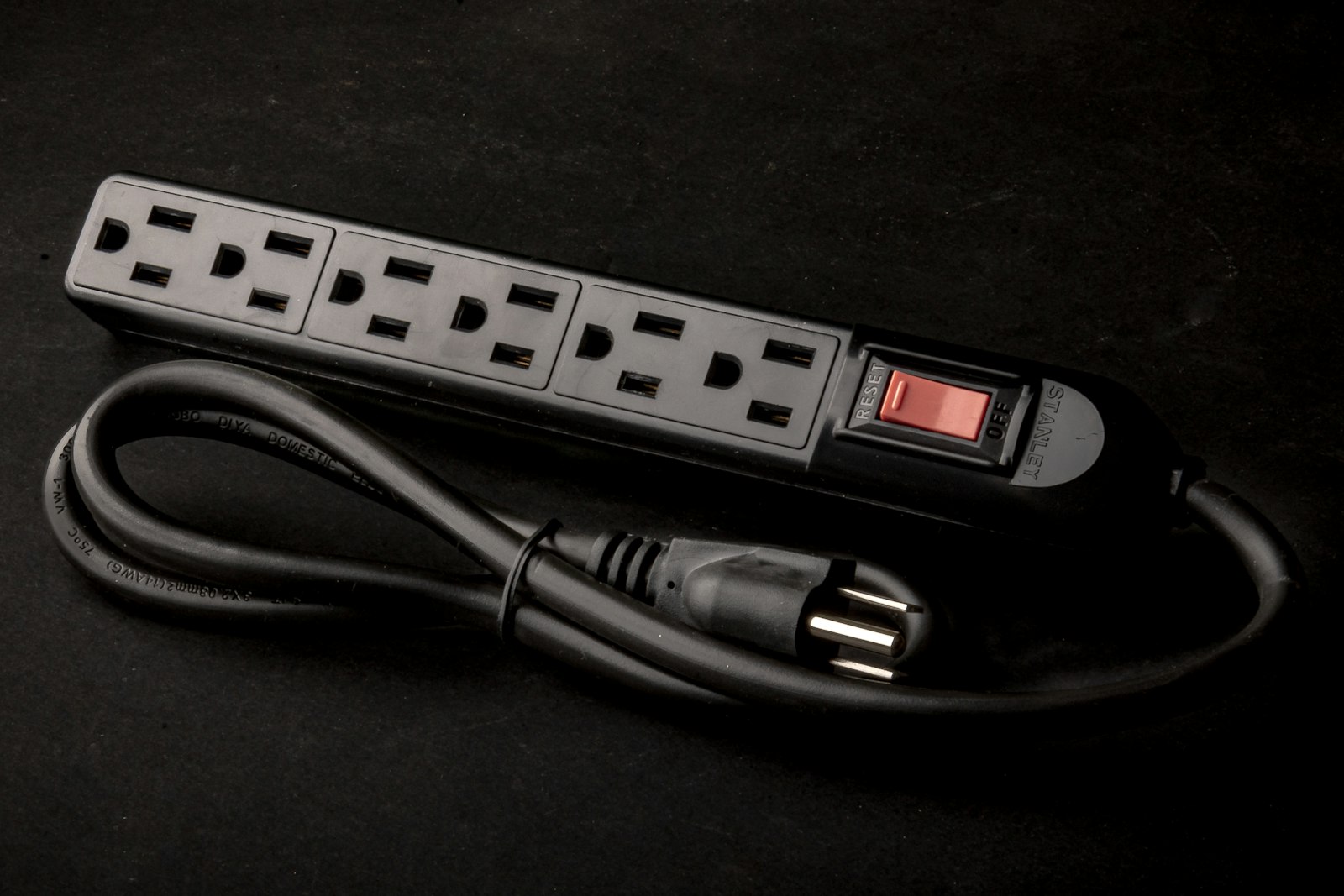
A Plain Power Strip Is Just More Outlets
A basic power strip is nothing more than an extension of your wall outlet. It takes one receptacle and turns it into six, eight or twelve, with a cord long enough to reach wherever your gear actually sits. That is a convenience product, and there is nothing wrong with it — a phone charger, a desk lamp and a fan do not need anything fancier.
What a plain strip does not do is protect anything from surges. Many of them do have a small circuit breaker built in, and that breaker trips if you draw too much current — it is an overload protector, not a surge protector. It reacts in milliseconds when you plug a space heater in alongside a hair dryer; it does absolutely nothing about a lightning strike or a utility switching spike that sends a few thousand volts down the line for a fraction of a second. The names sound similar, but overload and overvoltage are different problems, and one box does not solve both.
If the packaging says nothing about joules, clamping voltage or surge protection, assume it has none. Marketing departments are not shy about surge specs — if they paid for the components, they would print the numbers.
What a Surge Protector Actually Does
A surge protector looks like a power strip because it is built on one — then adds the parts that matter. Inside, the key components are metal-oxide varistors, or MOVs: little discs that sit across the hot, neutral and ground conductors and normally do nothing at all. When the voltage spikes above a threshold, the MOVs instantly conduct, shunting the excess energy to ground before it reaches whatever you have plugged in. That is the whole trick, and it happens in nanoseconds.
The trade-off is that MOVs are sacrificial. Every surge they absorb degrades them a little, and one big hit can use them up entirely. This is why quality surge protectors have a "protected" indicator light — it tells you the MOVs are still functional. When that light goes out, the strip still passes power, but the protection is gone and you are running unprotected without knowing it. A cheap no-name strip with a fake green LED is arguably worse than an honest plain power strip, because it gives you confidence you have not earned.
Look for the UL 1449 listing on the box or the back of the unit. UL 1449 is the safety standard specifically for surge protective devices in North America; UL 1363 alone just means it is a relocatable power tap — a plain strip. If a product claims surge protection but carries no UL 1449 mark, walk away.
How to Read the Box: Joules, Clamping Voltage and the Fine Print
Three numbers tell you nearly everything about a plug-in surge protector.
First, the joule rating: the total surge energy the unit can absorb over its lifetime. Think of it like a sponge with a fixed capacity. For a TV, computer or home office workstation, treat 2,000 joules as the floor and buy higher if the gear is expensive — the 3,000 to 4,000 joule models are the sweet spot for serious setups. A 600-joule unit will handle small everyday spikes for a while but will be used up fast in an area with dirty power or frequent storms.
Second, the clamping voltage: the voltage at which the MOVs kick in. Lower is better — you want the protection to engage before the spike reaches a level that damages electronics. Look for 400 volts or less on the line-to-neutral rating (330V and 400V are the common UL 1449 ratings). Some budget units clamp at 500V or higher, which means your gear takes a bigger hit before the protector reacts.
Third, the connected-equipment warranty. Reputable brands back their surge protectors with a warranty that pays out if your gear is damaged by a surge while properly connected — typically $50,000 to $300,000 depending on the model. Read the terms, because they are conditional: the unit must be plugged directly into a properly grounded outlet, and data lines often have to run through the protector too. Still, a company that puts six figures behind its product is a company that believes its own specs.
A few housekeeping rules round out the picture. Never plug one surge protector into another — daisy-chaining voids the warranty and creates fire risk. Replace plug-in protectors every three to five years, or immediately after a major surge event like a nearby lightning strike. And check the grounding: a surge protector can only shunt excess energy somewhere if the ground path actually exists, which is why many units include a "not grounded" warning light. If that light is on, the protector is decorating your desk, not defending it.
The Protection They Don't Sell in the Power Aisle: Whole-House Defense
Here is the part most people miss: a plug-in surge protector is the second line of defense, not the first. It handles the surges that get past your panel, and it can only absorb so much. A direct lightning strike or a major utility fault can deliver tens of thousands of amps — far more than any strip is rated for. The real fix for that lives in your breaker panel.
A whole-house surge protective device (SPD) mounts next to your breakers and clamps surges at the point where power enters your home. It protects everything downstream: the hardwired appliances a plug-in strip can never reach (your HVAC, refrigerator, oven, water heater), plus every outlet in the house. With the big spikes stopped at the panel, the plug-in protectors at your desk only have to mop up the leftovers, which dramatically extends their life. This layered approach — panel-level device plus point-of-use protectors — is how commercial buildings do it, and there is no reason your home should settle for less.
Installing one means working inside a breaker panel, so the safety rules are non-negotiable: turn off the main breaker, verify every conductor is dead with a non-contact voltage tester before you touch anything, and call a licensed electrician if anything in the box looks unfamiliar, scorched or crowded. We walk through the full installation, breaker by breaker, in our whole-house surge protector guide — and the device itself costs roughly what a good TV costs, which puts the value proposition in perspective.
If you are a renter or not ready to open the panel, skip this section for now — the plug-in protectors below are still a genuine upgrade over a plain strip. Just know that the ceiling on your protection is lower without one.
Which One Should You Buy? The Honest Decision Guide
So which do you actually need? It depends on what is plugged in.
For a bedside lamp, a phone charger or a fan — anything cheap and easily replaced — a plain power strip is perfectly fine. You are buying outlets, not protection, and there is no reason to pay for protection you do not need.
For a TV, a gaming console, a computer or a home office workstation, buy a real surge protector: 2,000 joules minimum, 400V clamping or better, UL 1449 listed, with protected and grounded indicator lights and a meaningful connected-equipment warranty. This is the category where the extra thirty dollars is the cheapest insurance you will ever buy.
For a house full of electronics, a home office you depend on for income, or anywhere with frequent storms or flickery utility power, do the layered setup: a whole-house SPD in the panel plus quality plug-in protectors at the expensive gear. The panel device takes the big hits; the strips handle the rest. Nothing else you can buy gives you this level of coverage.
And the combination to avoid: an expensive-looking strip with no joule rating, no UL 1449 mark and a suspiciously cheerful "surge protection!" badge on the front. That is a plain power strip wearing a costume, and it is the most common way people discover — after the lightning storm — that they were never protected at all.
🛒 Parts you'll need for this project
Hand-picked gear that matches this guide — buying through these links supports the site at no extra cost to you.
- Belkin BE112230-08 12-Outlet Surge Protector (3,940 Joules)The point-of-use shield this guide is built around: 3,940 joules, UL 1449 listed, coax and phone-line protection, and a $300,000 connected-equipment warranty — sits under the desk and absorbs the spikes that get past your panel.
- Siemens FS140 Whole House Surge Protection Device (140kA)Type 2 SPD that installs in your breaker panel and clamps surges where power enters the home — pairs with the Belkin for the layered defense described above. Panel work: follow our whole-house guide or call an electrician.
As an Amazon Associate we earn from qualifying purchases.