Why Does My Circuit Breaker Keep Tripping? (And How to Fix It Safely)
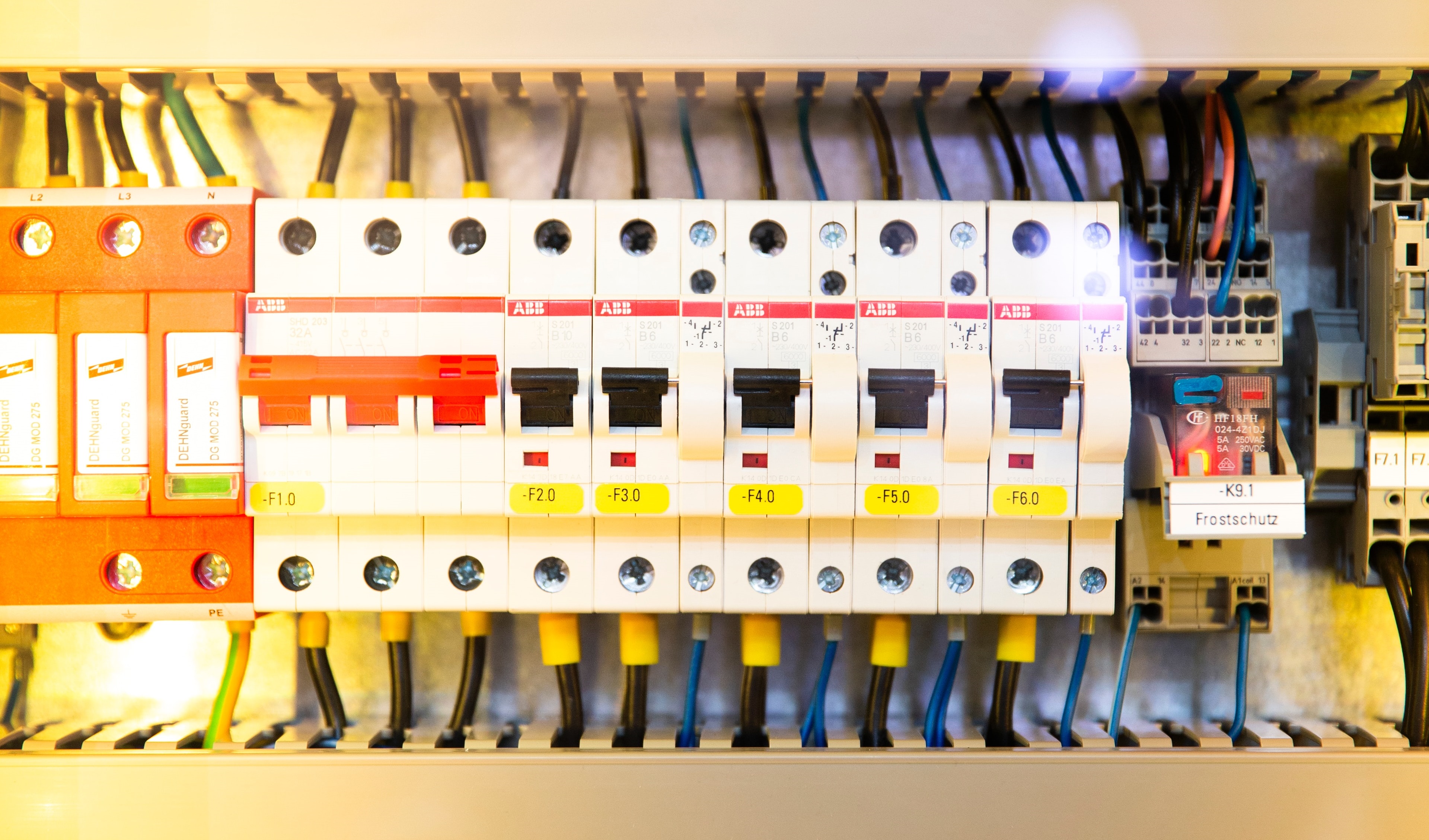
Your breaker is a messenger: learn to read the trip
Inside every circuit breaker is a thermal-magnetic mechanism with two trip paths. The thermal path reacts to sustained overload: a bimetallic strip heats up as current exceeds the rating and bends until it releases the switch. This takes seconds to minutes, which is why an overloaded circuit often runs fine for a while before the breaker gives up. The magnetic path reacts to massive surges: an electromagnet slams the breaker open in milliseconds when current spikes to hundreds of amps, which is what a short circuit produces.
That distinction makes the timing of the trip your first and best diagnostic clue. If the breaker runs for several minutes and then trips, especially when a big appliance is on, you are almost certainly looking at an overload. If it trips the instant you reset it, with a sharp snap and no delay, suspect a short circuit or a ground fault — something is letting current take a path it should never take.
There is a third flavor of trip on modern panels: GFCI and AFCI breakers. A GFCI (ground fault) breaker trips on tiny current leaks, as small as 5 milliamps, and an AFCI (arc fault) breaker trips when it detects the electrical signature of arcing. These breakers usually have a small test button and sometimes an indicator light, and they trip for reasons that look like ghosts until you understand what they are watching for. Before you do anything else, note how your breaker behaves: slow trip, instant trip, or a trip on a GFCI/AFCI device. Write it down. Everything that follows builds on that observation.
Cause 1: circuit overload — the usual suspect
Overload accounts for the large majority of nuisance trips. It happens when the total draw on one circuit exceeds what the breaker and wire can safely carry. A standard 15-amp circuit delivers 1800 watts at most, and the safe continuous limit is 80 percent of that: 1440 watts. One space heater draws 1500 watts all by itself, so a heater plus a television, a gaming console, and a few chargers on the same circuit is a trip waiting to happen. Kitchens are the classic overload zone: a microwave (1000W), a toaster (1200W), and a coffee maker (900W) cannot all run at once on a single 20-amp small-appliance circuit.
Diagnosing an overload is straightforward detective work. Unplug everything on the dead circuit, reset the breaker, and then plug things back in one at a time with a pause between each. When the breaker trips, the last item you connected is the straw that broke the camel's back — though the real problem is the total load, not that one device. Add up the wattage of everything you had running (check the labels on the back of each appliance), divide by 120 to get amps, and compare with the breaker rating.
The fix is load management, not a bigger breaker. Move the space heater or the air conditioner to a different circuit, stagger the kitchen appliances, or have an electrician run a dedicated circuit for the heavy load. Never replace a breaker with a higher-rated one to stop the tripping: the breaker protects the wire, and a 20-amp breaker on 14-gauge wire rated for 15 amps lets the wire overheat silently inside your walls. That single shortcut is responsible for a staggering share of residential electrical fires.
Cause 2: short circuit — the one you must not ignore
A short circuit happens when a hot wire makes direct contact with a neutral wire or a ground wire, creating a path of almost zero resistance. Hundreds of amps try to flow instantly, the breaker's magnetic trip fires, and the breaker slams open with an audible snap. The signature is unmistakable: the breaker trips immediately every time you reset it, with no delay at all. You may also notice a popping sound, a spark, or the sharp smell of burnt plastic from an outlet, switch, or appliance.
If this is your situation, stop resetting the breaker. Each reset slams hundreds of amps through the fault again, and every arc at the fault point generates intense heat that damages insulation and can start a fire inside a wall or device. Unplug every device on the circuit first; a failed appliance with an internal short is the most common cause, and removing it may solve the problem completely. Try the reset once with everything unplugged. If it holds, plug devices back one at a time until you find the culprit, then retire that appliance — do not keep using a device with an internal short.
If the breaker still trips instantly with nothing plugged in, the short is in the fixed wiring: a damaged cable, a loose wire touching where it should not, or a failed device in a box. That is firmly electrician territory. Leave the breaker off, mark it so nobody flips it back on, and call a licensed electrician. Wiring faults behind walls are not a DIY diagnosis project; finding them requires tools and experience, and the stakes of getting it wrong are a house fire.
Cause 3: ground faults and arc faults
A ground fault is current leaking where it should not go: from a hot wire through a person, water, or damaged insulation to ground. GFCI breakers and outlets exist to catch exactly this, tripping at just 5 milliamps — far below what a standard breaker would ever notice. If a GFCI breaker or outlet keeps tripping, take it seriously even though the circuit is not overloaded: something is leaking current, and in a bathroom, kitchen, garage, or outdoor location, that leak path could be you.
Common triggers are frustratingly ordinary. A hair dryer dropped near a wet sink, a frayed extension cord lying on damp garage concrete, condensation inside an outdoor outlet box, or an aging appliance whose internal insulation has cracked. Diagnose the same way as an overload: unplug everything, reset, and reintroduce items one at a time. When you find the device or location that trips it, inspect cords for cracks, feel for moisture in outlet boxes (with the power off), and retire damaged cords instead of taping them.
Arc faults are the subtler cousin. An AFCI breaker listens for the high-frequency signature of electricity arcing across a loose connection or damaged wire — the kind of fault that starts fires without ever drawing enough current to trip a standard breaker. AFCIs sometimes nuisance-trip on motor-driven appliances with brushes, like older vacuum cleaners or treadmills, because brush motors naturally arc a little. If a specific appliance always trips the AFCI, try it on a non-AFCI circuit; if it runs fine there, the appliance is electrically noisy rather than dangerous. But if an AFCI trips with no clear appliance cause, do not just swap it for a standard breaker — the arc it is detecting may be real, and loose connections behind walls deserve an electrician's eyes.
Cause 4: the breaker itself is wearing out
Breakers are mechanical devices, and like all mechanical devices they wear out. A breaker that has tripped dozens of times over the years, or one that has sat in a hot panel for two decades, can start tripping at currents well below its rating. The telltale signs: the breaker trips under loads it used to handle fine, it feels loose or wobbly compared to its neighbors, the toggle does not snap crisply, or the breaker body feels warm to the touch while the circuit is running a normal load.
You can confirm a suspect breaker with the same process of elimination. If the circuit holds fine for weeks after you redistribute the load and the math says you are well under the rating, yet the same breaker still trips, the breaker is the likely culprit. Another clue: a breaker that trips immediately with absolutely nothing connected, no shorts found, and no GFCI involvement may have a failed internal mechanism.
Replacing a breaker means working inside the main panel, where the incoming service lugs stay live even with the main breaker off — touching them can kill you. This is not a homeowner YouTube project; it is a ten-minute job for a licensed electrician with the right insulated tools and training. And remember the golden rule: the replacement must be the same rating and type. Upsizing a breaker to stop nuisance tripping does not fix anything; it removes the protection your wiring depends on.
Safe troubleshooting, step by step
Here is the complete safe procedure, in order. First, unplug or switch off everything on the tripped circuit — every lamp, charger, and appliance. This isolates the wiring from the loads and tells you which side the problem is on. Second, go to the panel. Stand to one side, not directly in front of it, keep your feet dry, and use one hand. Push the tripped breaker firmly to the full OFF position first — a tripped breaker sits in a middle position and will not reset properly from there — then flip it fully ON.
Third, watch and wait. If it trips instantly with everything unplugged, leave it OFF and call an electrician: you likely have a short or a wiring fault. If it holds, plug things back in one at a time, waiting a minute or two between each, and do the wattage math as you go. When you find the combination that trips it, you have your answer: redistribute those loads across different circuits or schedule a dedicated circuit.
Call a licensed electrician — and stop troubleshooting yourself — if any of these are true: the breaker trips instantly with nothing plugged in, you smell burning or see scorch marks on any outlet or device, the panel itself buzzes, feels hot, or shows rust or moisture, the same circuit trips repeatedly even after you reduced the load, or you feel unsure at any point. Also call one before opening the panel for anything beyond flipping breakers. Breakers that trip are doing their job; your job is to listen to them, not to argue with them by forcing the handle back on.