How to Safely Use a Portable Generator During a Power Outage: A Beginner's Guide
The three ways generators hurt people
Understanding the dangers first makes every safety rule obvious. The first killer is carbon monoxide. A portable generator's engine produces odourless, colourless CO in enormous quantities; it can incapacitate you in minutes and kill you in under an hour. This is why a generator never belongs indoors, in a garage, on a porch, or anywhere near an open window. Most generator deaths are CO deaths, and every one of them was preventable.
The second danger is backfeeding. If you plug a generator into a wall outlet to feed your house wiring, electricity flows backwards through your panel and out onto the utility lines. Utility crews working on lines they believe are dead can be electrocuted by your generator, and your home's wiring can overheat and catch fire. Backfeeding is illegal in most places, and for good reason: it endangers people you will never meet.
The third danger is fire and burns. Petrol is volatile, generator exhausts run hot enough to ignite nearby materials, and refuelling a hot engine is one of the fastest ways to start a fire you cannot control. Add electrical shock from wet conditions and damaged cords, and you have the complete threat picture. Every rule below exists to neutralise one of these four hazards.
Before the outage: size it, fuel it, maintain it
Buy or borrow the generator before you need it, because an outage is the worst time to learn your equipment. Sizing starts with two numbers printed on your appliances: running watts, what a device draws continuously, and starting watts, the brief surge a motor needs to spin up. A fridge might run at 700 watts but need 2200 to start its compressor. Add the running watts of everything you want to power at once, add the largest starting surge, and buy a generator rated at least 20 percent above that total.
Fuel freshness matters more than beginners expect. Petrol degrades in three to six months, and stale fuel is the number one reason generators refuse to start on the day they are needed. Store fuel in approved containers, rotate it through your car or lawnmower every few months, and consider a fuel stabiliser if you store long term. Check the oil before every use; many generators have a low-oil shutdown, but some cheaper models will cheerfully destroy their own engines without it.
Rehearse once in daylight and fair weather. Unbox the generator, read the manual, and practise the start sequence, oil check, and load connection so the first outage is not your first lesson. Store the manual, a funnel, spare oil, and a fire extinguisher rated for fuel fires with the generator, not somewhere you will be hunting for them in the dark.
Placement: outdoors, 20 feet out, pointed away
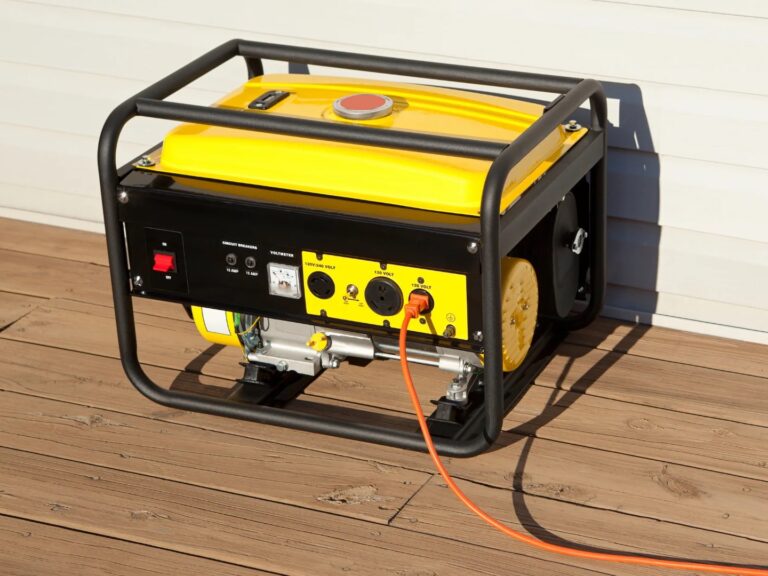
Placement is the single most important safety decision, and the rule is absolute: the generator runs outdoors, at least 20 feet from your home, with the exhaust pointed away from the building. Keep it clear of doors, windows, vents, and air-conditioning intakes, because wind and airflow patterns can pull exhaust back inside even at distance. Never run it in a garage, basement, carport, shed, or under a deck, even with the door open. Partially enclosed spaces trap CO while feeling ventilated.
Install battery-operated carbon monoxide alarms on every floor of your home before the outage season, and test them. They are your last line of defence if exhaust finds its way inside. If an alarm sounds or anyone feels dizzy, nauseous, or weak while the generator is running, shut the generator down, get everyone into fresh air immediately, and call emergency services. Do not re-enter until the alarm clears and you have repositioned the unit further away.
The ground under the generator matters too. Set it on a dry, level surface where it will not tip, and protect it from rain and snow with a purpose-built generator tent or canopy, never an improvised tarp draped over the unit. Water plus a generator is a shock and electrocution risk, and covering the exhaust side can trap heat and fumes. A canopy open on all sides keeps it dry without trapping anything.
Connecting appliances the safe way
For most homeowners, the correct method is also the simplest: plug appliances directly into the generator's outlets, or run a heavy-duty outdoor-rated extension cord from the generator to the appliance. Use cords rated for outdoor use with three prongs and a gauge matched to the load; a long, thin cord under a heavy load overheats and drops voltage, which can damage motors. Keep connections dry and off wet ground, and never daisy-chain multiple cords when one proper cord will do.
What you must never do is connect the generator to your home's wiring through a wall outlet, the infamous suicide cord with two male ends. As discussed, this backfeeds the grid and can kill line workers and burn your house down. It also bypasses your home's breakers in ways that remove their protection. No shortcut is worth it; if the job needs your home's circuits, it needs the proper equipment described next.
The proper way to power household circuits is a transfer switch, installed by a licensed electrician before the emergency. It disconnects your home from the utility grid and connects selected circuits to the generator, so power flows safely in one direction. A manual transfer switch installation typically requires a permit and inspection; your electrician handles both. This is the one piece of generator equipment that is firmly professional territory, not a DIY project.
Starting, running, and refuelling
Start the generator with no load connected, let it warm up for a few minutes, then add appliances one at a time, largest first. Staggering the load protects the generator from the combined starting surges that trip its overload protection or, worse, bog the engine down into a damaging stall. If the generator starts struggling, sounding laboured or dimming its output, switch off non-essential loads until it recovers.
Refuelling is where complacency bites. Always switch off the generator, remove the electrical loads, and let the engine cool for several minutes before opening the fuel cap. Spilling petrol on a hot engine or exhaust can flash into fire in seconds. Refuel outdoors in daylight or with a headlamp, never with an open flame nearby, and wipe up any spills before restarting. Keep children and pets well away from the generator at all times during operation.
When the power returns, remove the loads first, then switch the generator off and disconnect the cords. Let it cool, check the oil, and run it dry of fuel or drain the carburettor before storage so varnish does not clog the fuel system. A few minutes of care after each outage is what makes the generator start reliably for the next one.
When to call a licensed electrician
DIY ends where your home's wiring begins. Call a licensed electrician if you want generator power on your household circuits, which means a transfer switch or an interlock kit sized to your panel and local code. The electrician will also confirm your panel and grounding can handle what you are asking of it, pull the permit, and arrange the inspection. This is inexpensive insurance against the single most dangerous generator mistake.
Also call a professional if you are considering a permanently installed standby generator. These connect to your gas supply and your panel, start automatically, and involve both fuel plumbing and electrical work that is firmly beyond DIY. They cost more than a portable unit, but for homes with medical equipment, well pumps, or frequent long outages, the automatic, always-ready nature is worth discussing.
Finally, if your generator behaves strangely, trips its breakers repeatedly, or produces fluctuating voltage that dims lights, stop using it and have it serviced. Bad power damages electronics silently, and a generator with an electrical fault is not a tool you troubleshoot by feel. Know the boundary between user maintenance, oil, fuel, filters, and anything electrical, and respect it.