Top 7 Electrical Mistakes to Avoid at Home
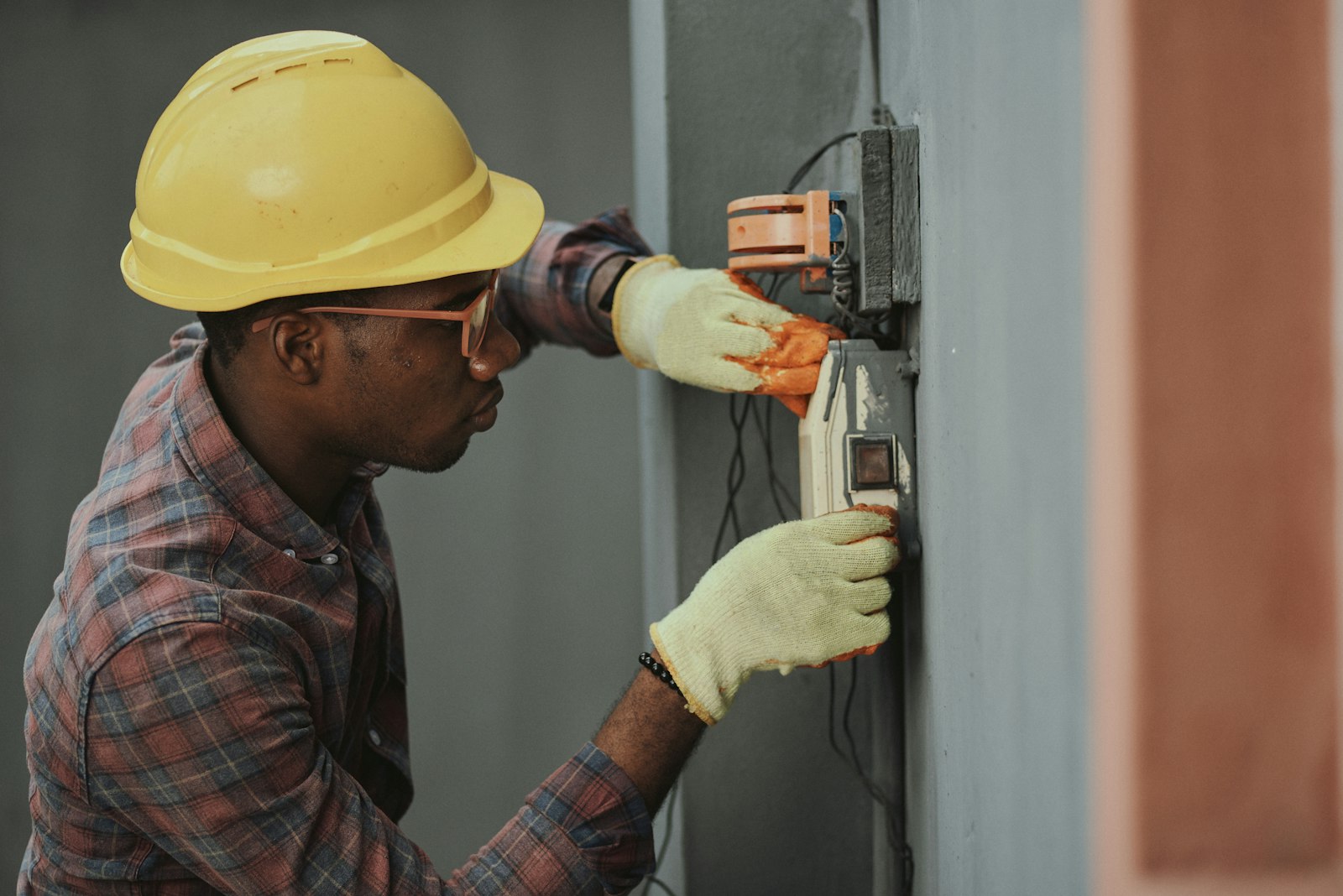
Mistake 1: Working on live circuits
The most common and most unforgiving mistake is trusting a breaker label instead of testing. Panels get mislabeled during renovations, breakers get moved, and shared neutrals can keep a supposedly dead circuit energized. Every year, competent DIYers get shocked this way.
The fix is a ritual, not a suggestion: switch off the breaker, then check every wire in the box with a non-contact voltage tester. Test the tester on a known-live outlet first, because a dead battery in your tester can lie to you just as dangerously as a wrong label. Only when the tester stays silent do you touch anything.
Make it a habit to say out loud what you are about to touch and why you believe it is dead. It feels silly until the day it catches you reaching into the wrong box.
Mistake 2: Using the wrong wire gauge
Wire gauge must match the breaker protecting it: 14 AWG for 15-amp breakers, 12 AWG for 20-amp breakers, no exceptions. The breaker protects the wire, and an oversized breaker on undersized wire means the wire becomes the fuse, overheating inside your walls long before the breaker trips.
This mistake usually happens during repairs, when someone extends a circuit with whatever cable is lying around, or replaces a breaker with a bigger one to stop nuisance tripping. A breaker that trips repeatedly is telling you the circuit is overloaded; the answer is less load or a new properly-wired circuit, never a bigger breaker.
When buying cable, read the sheath printing carefully: 12/2 means 12-gauge, two conductors plus ground. If you are ever unsure what gauge is already in the wall, a cheap wire gauge tool settles it in seconds.
Mistake 3: Loose connections and backstabbed outlets
Loose connections cause arcing, and arcing causes heat, and heat causes fires. The notorious shortcut is backstabbing: pushing stripped wire into the push-in holes on the back of an outlet instead of wrapping it around the side screws. It is fast, it is legal in many places, and it is the connection electricians love to hate because spring pressure loosens over years of thermal cycling.
The reliable method is the screw terminal: strip the right length, curl the wire clockwise around the screw so tightening pulls the loop closed, and tighten firmly. For joining wires, twist-on wire nuts are fine when sized correctly and twisted tight; lever-style connectors are even more forgiving and reusable.
After making any connection, give each wire a firm tug. If it moves, it was not tight enough. Then fold the wires neatly into the box without forcing them; cramming creates pressure that works connections loose over time.
Mistake 4: Overloading circuits and power strips
A standard 15-amp circuit safely delivers about 1440 watts continuously (80 percent of 1800). One space heater draws 1500 watts by itself. Plug that heater into a power strip already feeding a computer setup and you are running a overloaded circuit that the breaker may or may not catch in time, because breakers respond to sustained overload slowly.
Daisy-chaining power strips multiplies the hazard: each connection adds resistance and another point of failure, and cheap strips often have thinner internal wiring than the wall circuit feeding them. Never plug a space heater, air conditioner, or any heating appliance into a power strip, and never chain strips together.
Do the wattage math before you plug in. Add up the devices, divide by 120 for amps, and keep the total under 80 percent of the breaker rating. If the numbers do not fit, the honest fix is a new circuit, not a bigger strip.
Mistake 5: Skipping GFCI protection where it matters
Ground fault circuit interrupters save lives in wet locations by detecting tiny current leaks, as small as 5 milliamps, and cutting power in a fraction of a second. Code requires them in bathrooms, kitchens, garages, outdoors, and unfinished basements, yet older homes often lack them.
The mistake is not just missing GFCIs but misunderstanding them. A GFCI outlet protects everything downstream on its load terminals, so one properly wired GFCI can protect a whole string of regular outlets. But wire it backwards, with the feed on the load terminals, and nothing downstream is protected while the GFCI itself looks normal.
Test every GFCI monthly with its test button, and replace any that will not trip or will not reset. They wear out. A GFCI that cannot trip is just an expensive regular outlet giving you false confidence.
Mistake 6: Miswiring switches and outlets
Swapping line and load, reversing hot and neutral, or miswiring a three-way switch are the classic wiring errors, and they often produce symptoms that look fine at first. An outlet with reversed polarity will still power your lamp; it just leaves the threaded bulb socket energized, waiting for a finger during a bulb change.
Three-way switches cause the most head-scratching because travelers and the common terminal all look alike. The fix is documentation: photograph everything before disconnecting, label each wire with tape, and identify the common terminal, usually the odd-colored screw, before you start.
After any device replacement, test with a three-light outlet tester. It takes ten seconds and instantly shows reversed polarity, open ground, and open neutral. For switches, verify the light responds correctly from every location before you button up the boxes.
Mistake 7: Burying junction boxes behind drywall
Every wire splice must live inside an accessible junction box, and accessible means you can reach it without cutting drywall. Burying a box behind new drywall during a renovation is unfortunately common, and it is both a code violation and a genuine hazard: connections loosen over decades, and the next person troubleshooting has no way to find the splice.
If a renovation leaves you with a splice in an awkward spot, the code-compliant options are to reroute so the box lands somewhere accessible, like a closet or unfinished space, or use a listed splice device rated for concealed use where your local code allows it. The lazy option, drywalling over it, trades an hour of rerouting for a permanent hidden fire risk.
When in doubt, add an access panel. A small removable panel in a closet wall is invisible in daily life and keeps every connection inspectable for the life of the house.